
Are you tired of juggling multiple SIM cards while traveling abroad? You might be surprised by the eSIM advantages you’re missing out on. This game-changing technology exists but only 36% of consumers in key markets know about it.
Your travels between countries become easier with an eSIM card that eliminates the need to buy multiple physical SIMs. You can store up to five virtual SIM cards at once, which makes it perfect for eSIM international travel. eSIM travel has become more affordable with providers like Airalo or Saily offering 5GB of data for just $16-20 in regions of all types.
The benefits of using an international eSIM go beyond just convenience and savings. Your eSIM card leaves a smaller carbon footprint and emits 46% less emissions throughout its lifecycle. On top of that, it gives you the same benefits as dual-SIM phones, so you can keep two phone numbers on a single device. GSMA expects eSIM downloads to surpass 1 billion by 2025, making this the perfect time to see how this technology can change your travel experience.
Seamless Mobile Switching with eSIM
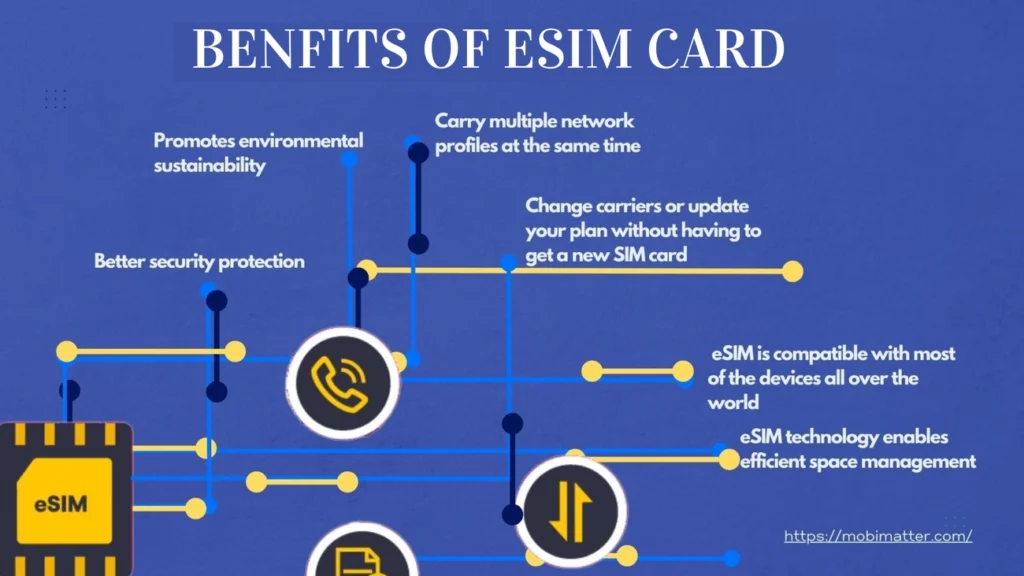
Physical SIM card swapping is a thing of the past. eSIM technology lets you change carriers with just a few screen taps. This built-in solution works great for travelers and regular users who want more flexibility.
Get 30% off any Nomad eSim plan using the code JACK92CB
Smooth Mobile Switching with eSIM: Key Benefits
Switching between carriers or plans without physical SIM swapping is one of the best things about eSIMs. This digital solution comes with several advantages:
- Instant activation: You can set up your eSIM in minutes instead of waiting days for a physical card to arrive. No more waiting for mail or trips to carrier stores.
- Multiple profile management: You can store and manage up to eight or more eSIMs on one device. This lets you keep separate personal and business lines without carrying two phones.
- Better security: eSIMs can’t be physically removed, which makes them safer against theft and unauthorized access. They’re also very hard to clone, which cuts down on SIM-swapping scams.
- Remote provisioning: You can change your carrier or plan digitally without needing a new physical card. This really helps when you’re traveling.
- Eco-friendly alternative: eSIM technology cuts down on plastic SIM cards and packaging. It reduces CO2 emissions by 46% compared to regular SIM cards.
Smooth Mobile Switching with eSIM: How It Works
Switching between carriers or starting new plans with an eSIM is pretty simple:
- Original setup: Compatible devices come with eSIMs pre-installed as small, rewritable chips in your phone’s hardware.
- Profile activation: You can activate an eSIM in several ways:
- Scanning a QR code from your carrier
- Using a carrier app
- Using a carrier link
- Typing information manually
- Profile management: After setup, you can switch between profiles in your device settings:
- On iPhone: Settings > Cellular > Add eSIM or Convert to eSIM
- On Android Pixel: Settings > Network and Internet > SIMs
- On Samsung Galaxy: Settings > Connections > SIM Manager
- Switching carriers: Getting a new carrier just means downloading a new eSIM profile from your new provider.
iOS 26 makes things even better. Some carriers and phone makers now let you move your eSIM between Android and iPhone. This makes switching devices much easier than before.
Smooth Mobile Switching with eSIM: Best Use Cases
eSIM technology really shines in situations where regular SIMs don’t work as well:
International Travel: You can start a local data plan before you leave instead of searching for SIM cards at foreign airports. This saves you from looking for SIM vendors when you land and helps avoid big roaming charges.
Business Travelers: You can keep your home number and add local data abroad. This means people can reach you on your main number while you enjoy cheaper local data rates.
Multiple Device Users: eSIM works smoothly across phones, tablets, smartwatches, and laptops without dealing with multiple physical cards. This works especially well for wearable devices that don’t have much space.
Remote Work: Companies with remote workers find it easier to set up devices without sending physical SIMs. IT teams can assign numbers and data access remotely and remove them when someone leaves.
Signal Optimization: You can switch to the strongest network in areas with poor coverage. This helps a lot if you work in rural or remote places.
Your choice between physical SIMs and eSIMs depends on your device and what you need for connectivity. In spite of that, eSIM use keeps growing—expected to reach 3 billion devices by 2030. The ease of switching carriers shows how mobile connectivity has improved.
Global Coverage for International Travel

eSIM coverage now reaches more than 190 countries and regions worldwide. You can land almost anywhere, activate an eSIM, and get connected within minutes. This technology has changed the way we stay connected while traveling abroad.
Global Coverage for International Travel: Supported Regions
eSIM technology works in all major continents. Here’s where you’ll find the best coverage:
Europe: All but one of these 36 countries provide strong eSIM support, including France, Germany, Italy, Spain, and the UK. Travelers find this region the easiest to use international eSIMs.
Asia: The eSIM infrastructure works great in Japan, South Korea, Singapore, Thailand, Vietnam, and 13 other countries. Digital nomads love these destinations.
Americas: The USA, Canada, Mexico, and most South American countries (including Brazil, Argentina, Chile) support eSIM technology. You can often get regional plans that cover these areas together.
Middle East & North Africa: The UAE, Saudi Arabia, Qatar, Egypt, and nearby countries have adopted eSIM technology that offers reliable connections.
Oceania: Australia, New Zealand, and several Pacific islands give you dependable eSIM service.
Africa: South Africa, Kenya, Morocco, and other nations now support eSIM connectivity. Remote areas might have limited coverage.
Local consumer eSIMs face restrictions in mainland China. However, international travel eSIMs still work through partner networks.
Global Coverage for International Travel: Best eSIM Providers
These providers stand out because they offer great coverage and value:
Airalo: Travelers choose Airalo because it partners with major local carriers (like Optus in Australia, O2 in the UK, and T-Mobile in the US). You can pick from country-specific plans, regional options (covering 39 European countries, 13 Asian countries, etc.), or global coverage.
Holafly: Every Holafly plan comes with unlimited data. They cover 200+ destinations and offer a global subscription that lets you use one eSIM across different regions.
Nomad: This provider matches Airalo and Holafly’s coverage and delivers good connectivity almost everywhere.
Ubigi: This pioneer started in 2017 under Translatel-NTT. They give you fast connections in over 200 countries, with 5G available in 40 of them.
Saily: The team behind NordVPN created Saily, which works in 190+ countries including popular spots like Thailand, Malaysia, Japan, and India.
Major carriers like T-Mobile also offer international eSIM solutions that work in over 215 countries.
Global Coverage for International Travel: Limitations to Know
eSIM coverage has some drawbacks you should know about:
Geographic Gaps: Tourist spots and big cities have excellent coverage. However, developing countries and remote areas might not work as well as physical SIMs.
Device Compatibility: Older phones might not work with eSIMs. Apple, Samsung, Google, and Huawei started adding eSIM support to their top models around 2018-2019. Many cheaper phones still don’t have this feature.
Activation Requirements: You need internet to activate an eSIM. This creates a challenge in new countries. Smart travelers buy and activate their eSIM before leaving home or wait until they find Wi-Fi.
Speed Limitations: Travel eSIMs often slow down after you use a certain amount of high-speed data. This can affect browsing, streaming videos, and other data-heavy activities.
Unlocked Device Necessity: Your phone must be unlocked to use an international eSIM. Carrier-locked phones only work with their network’s data plans.
eSIM technology makes global connectivity easier than ever. Understanding these limitations helps set the right expectations for your travels abroad.
Get 30% off any Nomad eSim plan using the code JACK92CB
Cost Savings Compared to Roaming Plans
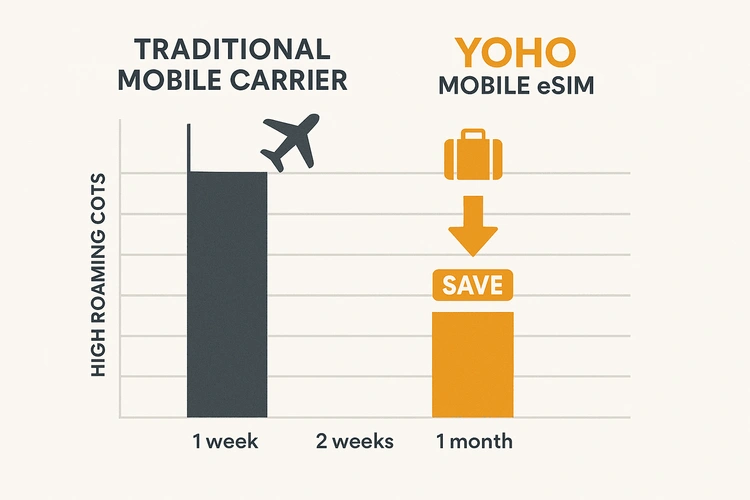
Your dream vacation can turn into a budget nightmare thanks to traditional roaming costs. The big carriers charge $10-$12 per day for international roaming whatever your actual data usage. A one-week international trip can set you back $70-$140 just to stay connected.
Cost Savings Compared to Roaming Plans: Price Comparison
The price gap between roaming and eSIM options is a big deal as it means that:
| Travel Duration | Traditional Roaming | eSIM Options | Potential Savings |
|---|---|---|---|
| 1 Week in Europe | $70-$84 | $11-$32 | Up to 85% |
| 1 Month Global | $300-$600 | $75-$165 | Up to 75% |
| Weekend Trip | $30-$60 | $7.50-$18 | Up to 80% |
Specific destinations show even bigger differences. A 7-day trip to Japan costs $70-$84 with traditional roaming, while you can get equivalent eSIM packages for just $17-$25. UK travelers pay £6-£7.86 daily for roaming charges, but regional eSIM plans cover all of Europe for $15-$30 weekly.
Budget-savvy travelers can take advantage of competitive eSIM rates:
- Holafly provides unlimited data starting at $49.90/month across 160 destinations
- Nomad offers plans starting from $0.54/GB in the United States and $0.58/GB in Turkey
- Regional eSIMs cover multiple countries under one plan, so you won’t need separate plans when crossing borders
The sort of thing I love about eSIMs is their transparent pricing with no hidden charges. This is nowhere near roaming plans that often surprise you with extra fees for exceeding data limits or making calls.
Cost Savings Compared to Roaming Plans: Budget Travel Tips
Here’s how to save money while staying connected abroad:
- Pre-purchase before departure – Get your eSIM ready over Wi-Fi before your flight and you’ll have instant connectivity when you land.
- Calculate your actual data needs – Google Maps uses about 5MB per hour of navigation. A 15-minute WhatsApp video call needs around 37MB. Netflix streaming takes about 7GB per hour.
- Opt for regional plans when visiting multiple countries – Airalo’s European eSIM options cover 36 countries and start at $5 for 1GB/7 days or $13 for 3GB/30 days.
- Consider longer-validity plans for frequent travelers – You’ll get better per-GB rates with packages that last 90-180 days compared to shorter plans.
- Use VoIP apps for calling – You can save $20-$50 monthly by making calls through WhatsApp, FaceTime, or other data-based services instead of paying voice roaming charges.
Get 30% off any Nomad eSim plan using the code JACK92CB
Cost Savings Compared to Roaming Plans: When to Use Local SIM Instead
Local physical SIMs make more sense in certain situations, even with eSIM’s convenience:
Local SIMs are great for extended stays in a single country. Thailand offers unlimited monthly plans for about $10, and in Laos, you can get 30GB for just $4. These prices beat even the best eSIM deals for single-country use.
Ultra-budget travelers can find better deals with local SIMs in some regions. This works especially well in Southeast Asia, where fierce carrier competition drives prices down. Just skip the airport vendors – their prices are usually double what you’d pay in town.
Short trips under 48 hours might work better with roaming, but only in places where setup time matters more than saving money.
Business travelers who make lots of voice calls often benefit from local SIMs with domestic calling packages, especially when VoIP calling isn’t reliable due to connection issues.
ESIMs ended up being the perfect choice for most international travelers. They offer great savings compared to traditional roaming and eliminate the hassle of finding local SIM vendors in new places.
Unlimited Data Options for Travelers
eSIM providers love to advertise “unlimited” data packages for travelers. The word “unlimited” needs a closer look to understand what you actually get. Marketing aside, most plans follow specific rules that affect how you use the service.
Unlimited Data Options for Travelers: What ‘Unlimited’ Really Means
The word “unlimited” in eSIM data plans means you’ll stay connected without getting cut off completely—not that you’ll always have high-speed data. Network providers use fair usage rules to keep their service quality high while making sure you stay connected. Your speed might drop after you hit a certain limit (usually 2-3GB per day).
Yes, it is true that “unlimited” plans won’t disconnect you when you reach your limit, so you’ll keep your connection even after going over daily caps. The speed slows down but keeps you online. Here’s the good part – these limits start fresh each day—typically at midnight local time—and you get back to full speed.
The daily high-speed data amount (2-5GB) is enough for most travelers. Even with slower speeds, you can still use simple services like messaging, email, and maps.
Unlimited Data Options for Travelers: Best Plans by Region
Here are some top providers offering unlimited data plans worldwide:
| Provider | Daily High-Speed Data | Notable Features | Approximate Monthly Cost |
|---|---|---|---|
| Holafly | Varies (with throttling) | Coverage in 160+ destinations | $64.90 |
| Ubigi | 3GB/day | Works in 50+ countries with 5G support | $49.90-$65 |
| Nomad | 2GB/day | Transparent daily caps | <citation index=”19″ link=”https://www.getnomad.app/blog/are-unlimited-data-plans-worth-it” similar_text=”Feature |
| Airalo | 3GB/day | No hotspot restrictions | Varies by region |
| Redteago | 300MB/day | Budget option | $0.75/day |
European coverage spans all EU countries with high-speed networks. Asian coverage shines in major cities but varies in rural areas. The Americas offer strong urban coverage, and rural access keeps growing.
Regional plans like “Europe Unlimited” or “Best Asia Unlimited” work as global packages. They cover multiple countries under one plan—perfect if you’re visiting several places.
Unlimited Data Options for Travelers: Hotspot and Streaming Use
Each provider handles mobile hotspot features differently. Some limit tethering to about 500MB daily, while others are more generous:
- Airalo lets you use hotspot without daily limits
- UPeSIM shares WiFi hotspot on all international eSIMs with no limits or extra costs
- Saily comes with VPN protection for secure hotspot connections
These plans work great for streaming fans who need video calls, HD streaming, and cloud storage. Just remember that streaming uses lots of data—Netflix needs about 7GB per hour in high definition.
Most high-end unlimited eSIM plans give you 4G/LTE as standard, plus 5G where available, with speeds from 20-100 Mbps based on your location. This makes them perfect for heavy data tasks like video meetings, uploading photos, and social media.
Unlimited data eSIMs make sense for travelers who want steady connectivity without watching their data usage—as long as you know what your plan includes.
Get 30% off any Nomad eSim plan using the code JACK92CB
Enhanced Security and Privacy with eSIM
eSIM technology offers better security than traditional SIM cards for international travelers. Your data and device stay safer during trips thanks to the way eSIMs are built into devices.
Enhanced Security and Privacy with eSIM: Anti-Theft Features
eSIMs are safer than traditional SIM cards when it comes to physical security. Thieves can’t remove an eSIM if they steal your phone. This makes unauthorized access much harder. Your device stays traceable through its cellular connection, which helps you get it back.
You can control your eSIM profile remotely, which is a powerful security feature. If you lose your device, your service provider can turn off your eSIM right away. This remote control works faster than deactivating old-style SIM cards, which often have delays that criminals can use to their advantage.
eSIMs use advanced authentication methods to curb fraud. You need multi-factor authentication to activate most eSIMs, including face or fingerprint verification. These extra security layers make eSIM profiles 99.9% better at stopping account compromise attempts.
Enhanced Security and Privacy with eSIM: VPN and Tracking
eSIMs are safer, but cellular providers can still track your location through network connections. Using a Virtual Private Network (VPN) with your eSIM adds an extra security layer.
Your VPN encrypts internet connections when you use your eSIM. This stops data theft on public Wi-Fi networks. The encryption helps protect your banking details and personal messages when you travel abroad.
VPN and eSIM technology work together to give you these security benefits:
| Security Feature | How It Works |
|---|---|
| Data encryption | Creates secure tunnel for all internet traffic |
| IP masking | Hides your actual location from websites and services |
| Safe public Wi-Fi use | Protects against network snooping in hotels and cafes |
Many eSIM providers now include VPN protection or easy VPN setup. You get constant encryption without installing separate apps.
Enhanced Security and Privacy with eSIM: Safer Than Physical SIMs?
eSIMs are safer than physical SIM cards in key ways. Regular SIMs can be attacked through hardware and software, but eSIMs only face software attacks. This makes them harder to compromise.
eSIMs use stronger encryption than physical cards. They use RSA-2048 encryption and elliptic curve cryptography—the same security that banks and government agencies trust. On top of that, eSIMs get regular security updates over the air, while physical SIMs keep the same security features forever.
eSIMs stop SIM swapping completely. This fraud happens when attackers trick carriers into moving your phone number to a new SIM card. SIM swapping attacks have grown by 400% over the last several years, which makes eSIMs more valuable.
Digital eSIM setup brings another security benefit: no one can intercept your SIM card during delivery. Physical cards might get intercepted or copied before reaching you. eSIM activation happens through secure digital channels with no human involvement.
Security-conscious travelers who want to stay connected safely while exploring the world are choosing eSIM technology more often.
Eco-Friendly and Sustainable Travel Choice

Picking an eSIM card for travel makes a real difference to our environment. Many travelers don’t realize their SIM card’s surprising impact on our planet.
Eco-Friendly and Sustainable Travel Choice: Environmental Impact
The numbers tell a clear story about eSIMs versus traditional SIM cards. Studies show eSIMs create 46% less CO₂ emissions than physical cards. An eSIM puts out 123g CO₂ equivalent during its life, while regular SIM cards produce 229g CO₂. This huge gap comes from getting rid of manufacturing, packaging, and shipping physical cards worldwide.
The telecom industry makes up about 0.4% of global carbon emissions. Each year, manufacturers produce 4.5 billion SIM cards. Moving to digital options could help our planet breathe easier. Companies like G+D see this opportunity and aim to make 75% of their money from green products by 2040.
Eco-Friendly and Sustainable Travel Choice: Plastic-Free Travel
Physical SIM cards add 20,000 tons of plastic waste to our planet yearly. These cards use polyvinyl chloride (PVC) that won’t break down and sits in landfills after just a short time of use.
The waste doesn’t stop at just the cards. We also get:
- Plastic packaging and cardboard carriers
- Instruction manuals and promotional materials
- Shipping materials used during transportation
An international eSIM lets you stay connected while helping cut plastic waste. You won’t need any physical items or packaging – it’s all digital.
Get 30% off any Nomad eSim plan using the code JACK92CB
Eco-Friendly and Sustainable Travel Choice: Long-Term Benefits
eSIM technology’s benefits go beyond just cutting waste. You can reprogram these digital SIMs remotely, unlike physical cards that need replacing when you switch carriers. Your device lasts longer too since you won’t wear out the SIM slot or need hardware changes.
eSIMs help create a circular economy for electronics. They cut down the need for raw materials like plastic, metal, and silicon. As more people use eSIMs, factories can stop making millions of plastic cards and switch to greener operations.
Eco-minded travelers can make a difference by choosing eSIMs. One plastic SIM might seem small, but millions of travelers making this choice adds up to big changes for our planet.
Easy Setup and Installation Process
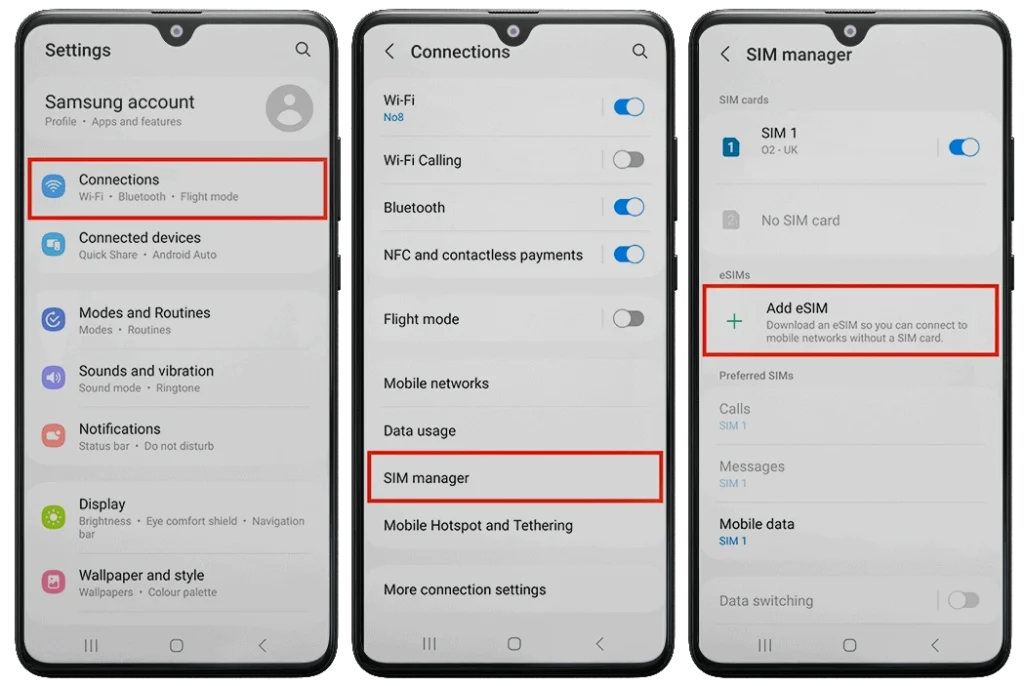
Getting an international eSIM ready takes just minutes. You can have uninterrupted connectivity before your flight takes off. The simple process works with many device types, making it available to most modern smartphone users.
Easy Setup and Installation Process: Step-by-Step Guide
Your device needs a Wi-Fi connection to ensure smooth installation. The simple setup involves these steps:
- Purchase an eSIM plan from your preferred provider
- Receive activation instructions – typically via QR code or email
- On iPhone: Go to Settings > Cellular > Add Cellular Plan > Scan QR code (or enter details manually)
- On Android: Go to Settings > Network & Internet > SIMs > Add SIM
- Label your eSIM (e.g., “Travel eSIM” or destination name)
- Enable data roaming in your settings
- Select a supported network upon arrival at your destination
The eSIM activates either right after installation or when you connect to a supported network at your destination.
Easy Setup and Installation Process: Compatible Devices
eSIM technology works with most smartphones made since 2018. Here are the compatible devices:
- Apple: iPhone XR and newer, iPad Pro (2018+), Apple Watch Series 3+
- Samsung: Galaxy S series and newer models
- Google: Pixel 7 and newer
- Others: Select Motorola, Lenovo and HP models
You can check your device’s compatibility by dialing *#06#. An EID number shows up if your device supports eSIM. You should also verify if your phone is carrier-unlocked by checking Settings > General > About – look for “No SIM restrictions”.
Easy Setup and Installation Process: Troubleshooting Tips
These solutions can help with activation issues:
- Restart your device – this fixes most minor glitches
- Check carrier settings version in Settings > General > About
- Reset network settings if you have connectivity problems
- Toggle Airplane Mode on and off to refresh connections
- Try manual network selection when automatic connection fails
iOS 18 users can use the Apple Support app to run additional diagnostics that help identify the source of persistent problems.
Comparison Table
| Advantage | Main Benefit | Key Statistics | Notable Features | Limitations/Considerations |
|---|---|---|---|---|
| Continuous Mobile Switching | Switch carriers without physical SIM swapping | Store up to 8+ eSIMs on single device | Quick activation, remote setup, better security | Needs internet connection for original setup |
| Global Coverage | Connection in most countries worldwide | Coverage in 190+ countries and regions | Regional plans ready, major carrier alliances | Coverage might be weak in remote areas |
| Cost Savings | Big cuts in roaming fees | Up to 85% savings on weekly trips | Buy in advance options, clear pricing | Local SIMs cost less for longer stays |
| Unlimited Data Options | Nonstop connection without breaks | 2-5GB daily high-speed data typically | Daily limit resets at midnight, multiple region plans | Speeds slow down after hitting daily limits |
| Better Security | Extra protection from theft and fraud | 99.9% more effective at stopping account breach | Two-factor checks, remote shutdown | Software attacks still possible |
| Eco-Friendly Choice | Less harm to environment | 46% less CO₂ emissions than physical SIMs | No plastic waste, no physical packaging | N/A |
| Quick Setup | Fast digital activation | Setup takes minutes | QR code or manual setup choices | Needs Wi-Fi for original setup, device check needed |
Conclusion
eSIM technology revolutionizes international travel with seven key advantages that make connectivity issues a thing of the past. You can switch between carriers with just a few taps, which eliminates the need to handle physical SIM cards when crossing borders. The extensive global coverage keeps you connected in over 190 countries, and you won’t need to search for local SIM vendors at each stop.
Your wallet will thank you too. eSIM adoption can save you up to 85% compared to regular roaming plans. The unlimited data options come with fair usage policies and provide uninterrupted connectivity throughout your experience. These embedded solutions make security concerns less worrying since they resist theft and unauthorized access better than physical cards.
Good news for eco-conscious travelers – eSIM technology creates 46% less carbon emissions than traditional SIM cards and produces zero plastic waste. Setting up takes just minutes, and you can arrange everything before you leave instead of wasting your vacation time.
GSMA expects eSIM downloads to exceed 1 billion by 2025, which shows how widely accepted this technology has become. This transformation goes beyond convenience and changes the way people connect while discovering the world. eSIM technology provides clear benefits over traditional options whether you visit multiple countries in one trip or just want easy connectivity abroad.
The frustrating airport ritual of searching for a local SIM card vendor is becoming obsolete. eSIM technology puts you in control and makes travel connections budget-friendly and stress-free. Pack your bags for your next international adventure – now with one less worry on your mind.